
July 9, 2026
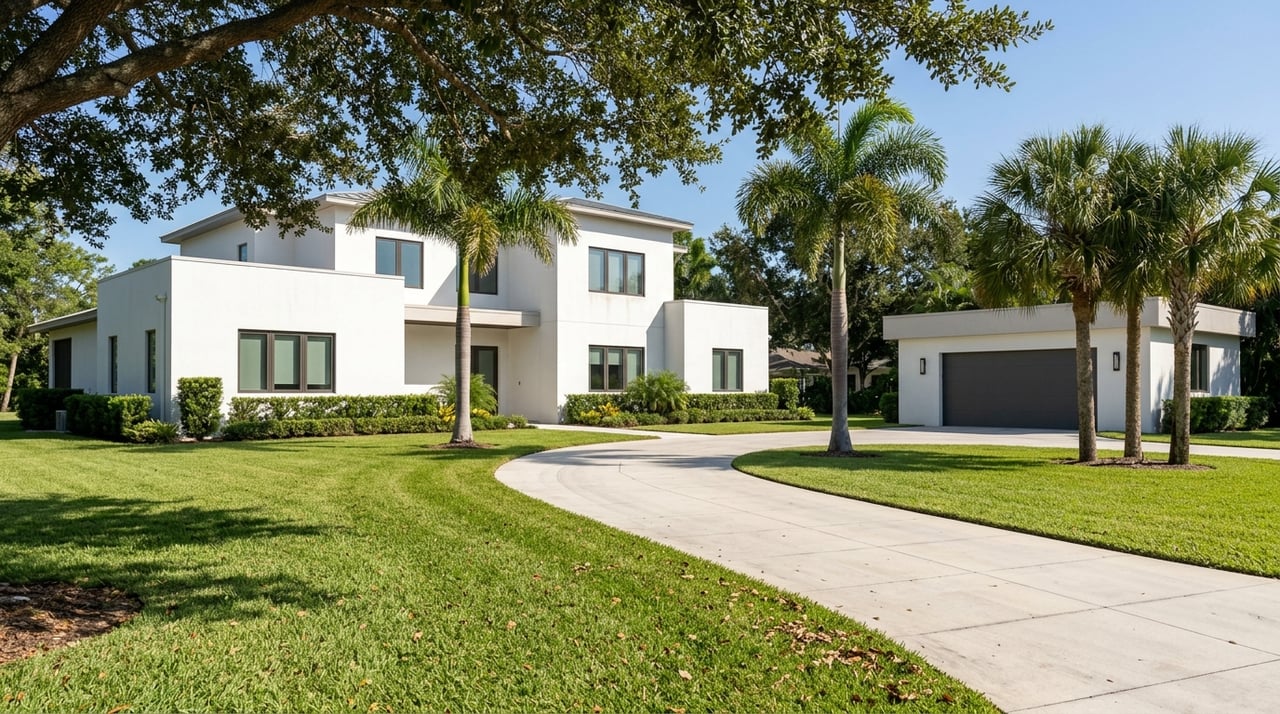
Are you dreaming about a home that does more than fit your house plans? In Loxahatchee, acreage often gives you room to think bigger, with space for a main residence, outdoor living, storage, a workshop, gardens, or even equestrian and agricultural uses. The key is knowing that on large rural parcels, smart design starts with the land itself, not just the floor plan. Let’s dive in.
Loxahatchee Groves sits in west-central Palm Beach County, where the local landscape guidance says most lots are 5 acres or more. That larger parcel scale is one reason buyers often picture a compound layout here instead of a standard suburban setup.
Palm Beach County also describes this area’s exurban pattern as historically rural, with sparse development, large treed lots, and small agricultural and equestrian uses. If you want privacy, flexibility, and room to organize different parts of your property, that context matters.
On acreage, the best designs usually begin with zones. You might plan for a main house, guest or accessory spaces, service areas, outdoor entertaining, storage, gardens, and animal-related uses, all with enough separation to keep the property functional.
In Loxahatchee, that kind of planning fits the broader local framework. Palm Beach County’s rural planning language supports single-family homes alongside compatible agricultural and equestrian uses, while also emphasizing open space, native vegetation, and compatibility with the area’s rural character.
Before you finalize where the pool, patio, barn, garage, or workshop should go, it helps to map how the entire parcel will work together. On a large lot, circulation, sight lines, drainage, and future utility access are just as important as the layout of the home itself.
One of the most important realities in Loxahatchee is that site conditions shape almost every design decision. The Loxahatchee Groves Water Control District says the area includes about 29 miles of unpaved roads and 30 miles of canals across roughly 8,000 acres.
That means drainage, grading, and access are not minor details. They are core parts of the design brief from day one. If your property plan does not account for how water moves across the site, where access points belong, and how grading may affect the parcel, later improvements can become much harder.
The town also requires a Right-of-Way Use Permit for work in rights-of-way or swales that could alter drainage, including grading, paving, earthwork, or placing structures and landscaping materials. In practical terms, that makes driveway alignment, culverts, and service access especially important early in the process.
If you are used to suburban homes, utilities may feel straightforward. On rural acreage, they often are not.
The Florida Department of Health in Palm Beach County says western Palm Beach County continues to add private residences and small businesses that use private wells and septic systems. It also reviews septic and well plans before a building permit can be issued and before occupancy.
For you as a buyer, that means utility assumptions should never be automatic. A dream compound design should confirm parcel-specific utility conditions before you commit to building locations, accessory structures, or outdoor amenities.
Private wells also need ongoing attention. The Florida Department of Health recommends annual testing for bacteria and nitrate, and notes that private well sampling is not required by the state when a home is sold. For homes served by wells, its buying and selling guidance recommends testing for coliform bacteria, nitrates, and lead.
The South Florida Water Management District also requires a well construction permit for new wells, repairs, modifications, abandonments, test wells, and monitor wells. If your compound vision includes new utility infrastructure, permitting should be part of your timeline from the start.
A beautiful site plan can still run into trouble if floodplain and grading issues are ignored. Palm Beach County says no construction or earth-moving is legal in a floodplain without a permit.
The county also notes that all properties in the county have some flood risk, and that windstorm insurance does not cover flood damage. For a large-lot property, elevation and drainage are not optional design features. They directly affect where structures, driveways, outdoor spaces, and utility improvements may work best.
The South Florida Water Management District also requires an Environmental Resource Permit for development or construction activities that affect wetlands, stormwater containment, flood protection facilities, site grading, or other surface-water impacts. If your vision includes reshaping the site, adding ponds, or making major drainage changes, those reviews may become part of the process.
A dream compound often includes more than one building. You may want a detached garage, workshop, barn, storage building, greenhouse, or guest-oriented space.
In Palm Beach County, the safest approach is to begin with zoning and site layout before you fall in love with a specific design. The county says future land use and zoning must be consistent, and permits are needed for many structures.
That matters because accessory uses can look simple on paper but become more complex once setbacks, utility placement, drainage corridors, and district-specific rules are applied. A cleaner overall layout usually reserves space for future utility work, access routes, and drainage before patios, fences, or planting beds are finalized.
If your compound vision includes RV storage or on-site RV use, that should be part of the site plan early. Loxahatchee Groves has a separate RV Parking Program for conforming or legal non-conforming Agricultural Residential parcels.
The town requires a separate permit, a site sketch, and utility and sewage documentation when applicable. It also requires 25-foot setbacks from all property lines. The number of RVs allowed can scale with acreage and bona fide agricultural classification, so this is not something to treat as a last-minute add-on.
Palm Beach County also says some Agricultural Residential properties with a Rural Residential future land use may allow a mobile home while the permanent home is being built, but only after a building permit for the single-family dwelling is already in place. For some buyers, that can be an important planning detail during construction.
For many acreage buyers, the dream is not only a large house. It is a property that supports a lifestyle, whether that means horses, hobby farming, gardens, orchards, barns, paddocks, or practical storage for equipment.
Palm Beach County’s comprehensive planning language says the Rural Tier supports large agricultural operations and single-family homes with small family-owned agricultural businesses, including equestrian uses. County zoning guidance also says domesticated livestock may be allowed accessory to a single-family use in the Rural and Exurban Tiers, and agricultural districts can allow horses, chickens, pigs, goats, and similar animals.
That creates real opportunity, but it also means your site design should be purposeful. If animals, paddocks, feed storage, internal roads, drainage features, or agricultural improvements may be part of your long-term use, those elements should help organize the property from the start.
Palm Beach County’s agricultural-improvement guidance adds that eligible bona fide uses can include horticulture, livestock, poultry, irrigation and drainage ditches, culverts, internal roads, and agricultural ponds. Florida law also exempts bona fide nonresidential farm buildings, farm fences, and farm signs from the Florida Building Code and local codes or fees, except for floodplain management rules.
The key word is bona fide. Agricultural flexibility can be valuable, but zoning, floodplain rules, and permitting still matter.
Some buyers want their acreage to support a workshop, landscape operation, or farm-related side business. That may sound like a natural fit on a large parcel, but Palm Beach County says only certain home businesses are permitted in residential zones, and many require special licensing.
The county also says a home occupation cannot be open to the public. If your compound vision includes business use, it is important to separate what feels possible from what local rules actually allow.
One of the biggest mistakes on acreage is assuming you can clear first and decide later. In Palm Beach County, vacant-property clearing requires a Tree Removal and Replacement Permit and a Site Development Permit.
The county also regulates native vegetation to limit unnecessary clearing, while invasive non-native species may be removed without a tree removal permit. If you want to preserve mature trees, manage views, or create pasture and building pads, it is better to plan carefully than to over-clear and create avoidable issues.
In a place where rural character and open space are part of the area’s identity, thoughtful land stewardship is not just good practice. It often supports a smoother project overall.
On a large property, landscaping can become a major feature of the compound. Gardens, paddocks, lawns, privacy buffers, and ornamental plantings all depend on a realistic water plan.
The South Florida Water Management District’s year-round landscape watering restrictions apply to irrigation from public or private systems, including private wells, with some exceptions for certain agricultural operations. That means irrigation design should be treated as a compliance issue as well as a performance issue.
The strongest compound plans in Loxahatchee usually share one trait: they respect the site before they chase amenities. Instead of asking how many extras you can fit onto the land, ask how the parcel wants to function.
That means organizing the property around drainage, access, floodplain limits, utility realities, vegetation, and zoning first. Once those fundamentals are clear, the house, outbuildings, outdoor spaces, and lifestyle features can come together in a way that feels both beautiful and workable.
If you are exploring acreage in Loxahatchee and want guidance grounded in Palm Beach County experience, Deborah Puleo offers local insight, practical strategy, and high-touch support to help you evaluate land, layout potential, and next steps with confidence.
Have questions about buying, selling, or moving to Palm Beach Gardens? Reach out anytime—Deborah is here to help with honest advice and local expertise.